
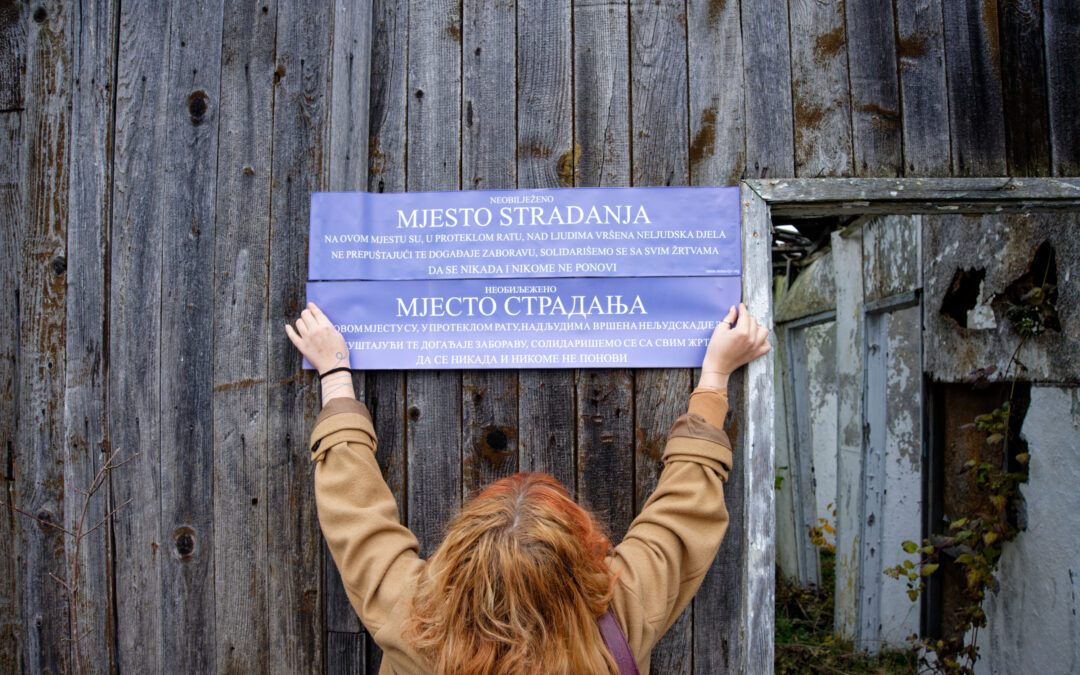
Together, peace activists of the Centre for Nonviolent Action Belgrade-Sarajevo and the Youth Initiative for Human Rights (YIHR) from Croatia and Serbia marked sites of suffering in Serbia, Croatia and Bosnia and Herzegovina.
In this action, former detention facilities and sites of killings were marked in the area of Šljivovica, Stajićevo and Begejci in Serbia, Dvorac Kerestinec and Dvor na Uni in Croatia, and Alipašino Polje in Sarajevo.
Since 2015, the Centre for Nonviolent action has been marking unmarked sites of suffering in Bosnia and Herzegovina, and more than 150 sites have been marked to date. YIHR Croatia had joined these actions previously on several occasions, but this was the first time an action was carried out with the participation of activists from three organisations and in the territory of three countries.
Many sites of suffering have not been properly and permanently marked, and the survivors and families of the missing are prevented from or hindered in accessing the sites. Although this marking is symbolic, its purpose is to call primarily on local authorities to provide proper memorialisation of victims and send a message to their communities about what took place in their proximity.
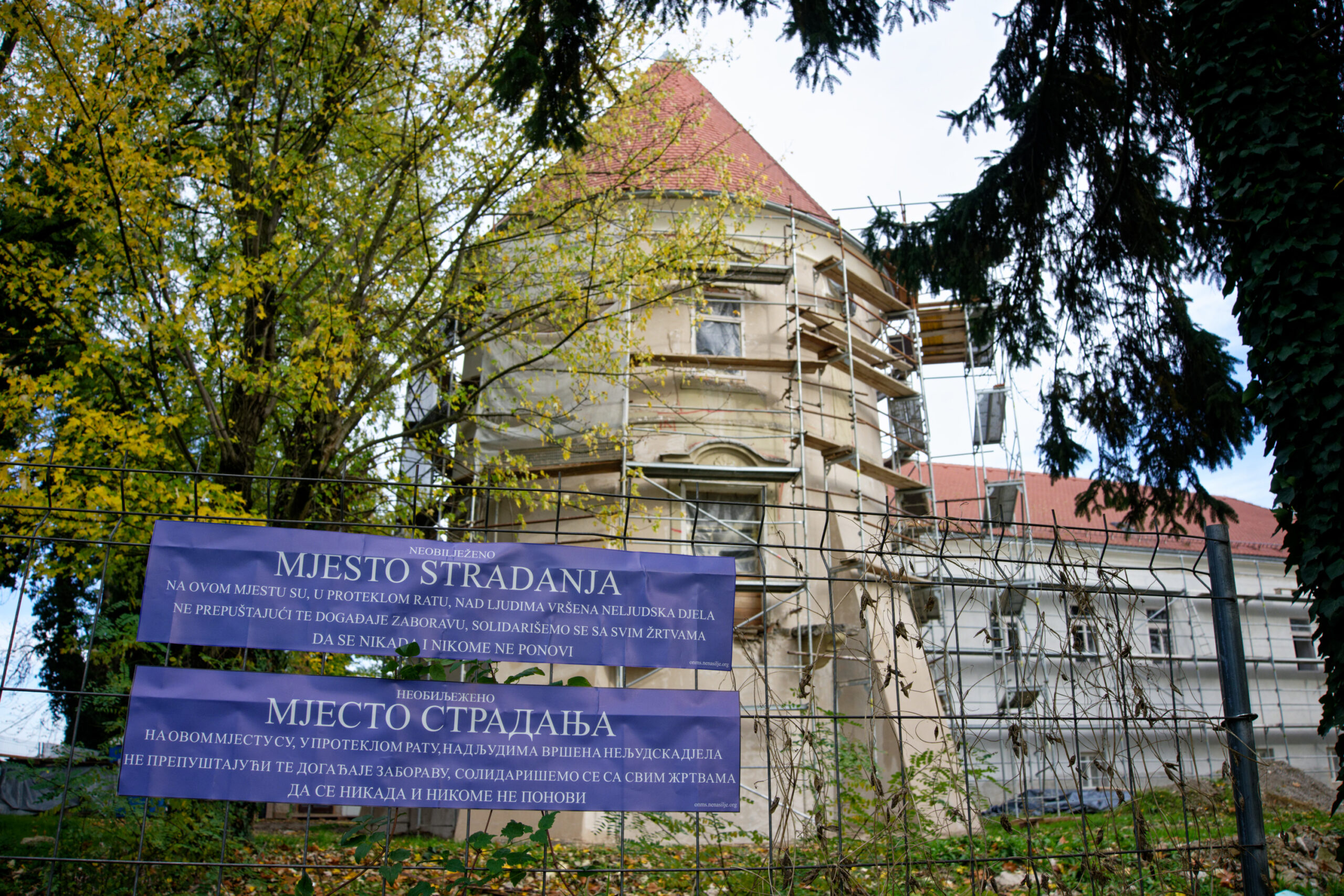
Croatia: Dvor na Uni and Dvorac Kerestinec
In August 1995, nine civilians from the Psychiatric Hospital and Petrinja Home for the Elderly were killed at the primary school building in Dvor. The killed civilians were Serbs and Croats, but the perpetrators of the crime have not been identified to this day. At the time, units of the Croatian Army (HV), the Army of the Republic of Bosnia and Herzegovina (ARBiH), the Army of Republika Srpska (VRS) and the Serbian Army of Krajina (SVK) all had a presence in the area.
From December 1991 to May 1992, the Dvorac Kerestinec building was used as a detention site for Serbs and Croats who were brought there mostly after the closure of the detention facility in Gajeva Street in Zagreb. At Dvorac Kerestinec, prisoners were subjected to daily ill-treatment and torture, including sexual abuse.
The action was joined by Iris Knežević from YIHR Croatia: “As the Youth Initiative of Croatia, we think that marking unmarked sites of suffering is of great importance in terms of dismantling dominant political narratives that are increasingly present in public discourse in Croatia. Such narratives spread intolerance and even hatred towards members of other minority groups, which can lead to re-traumatisation of victims who survived the wars of the 1990s. I also see the marking as important in breaking down the dominant discourse of Croatian victimisation, as the sole victims in the wars of the nineties. I think this marking will lead to Croatia finally recognising crimes committed against civilians of other nationalities.”
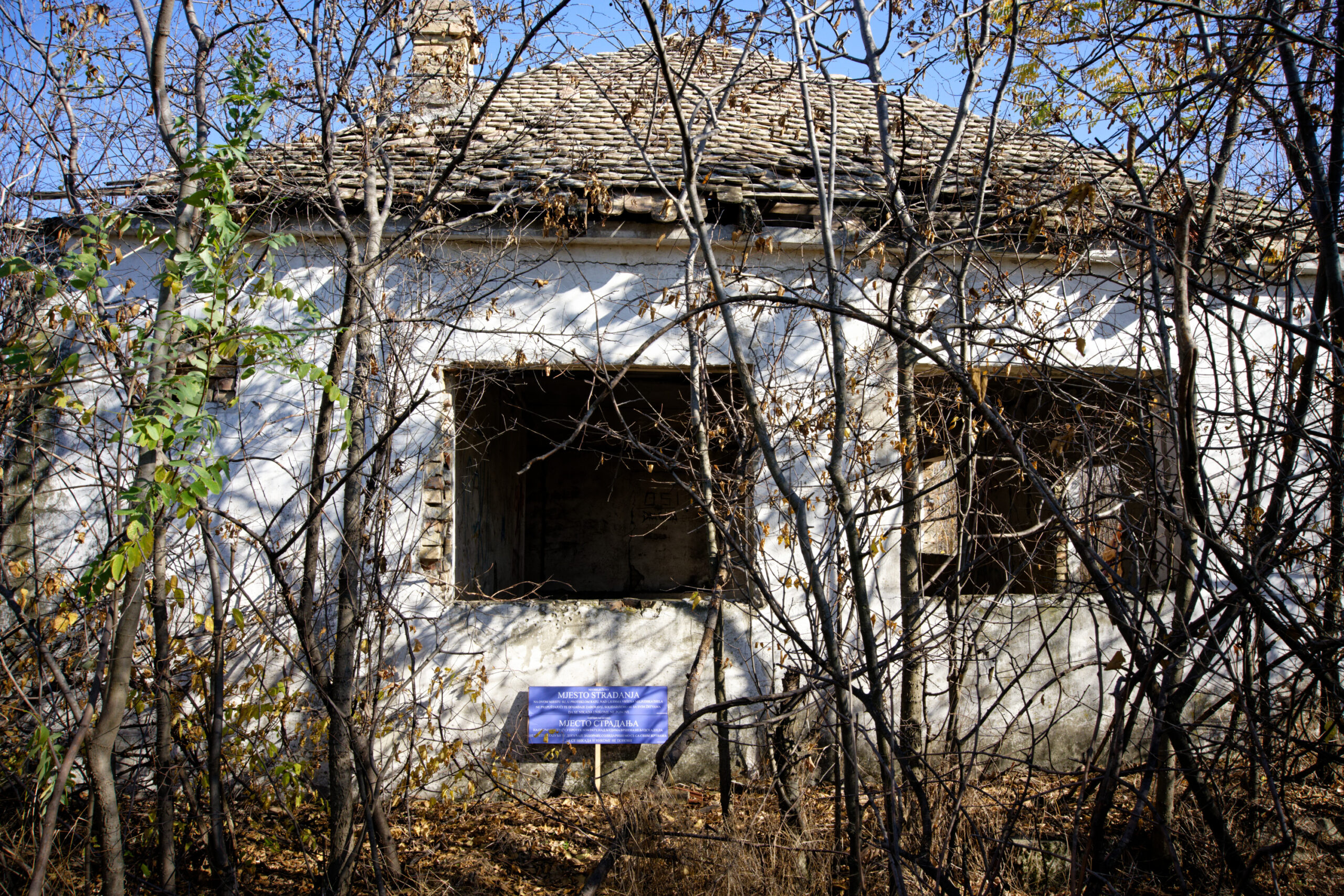
Serbia: Šljivovica, Stajićevo and Begejci (Torak)
Abandoned barracks of the former Planum construction company in the village of Šljivovica near Užice were used from August 1995 to 10 April 1996 as a site of detention for Bosniaks brought there by force mostly after the fall of the Srebrenica and Žepa enclaves. A total of 350 Bosniaks were detained there at various times, and the prisoners were subjected to inhumane conditions, abuse and interrogations. Two prisoners died due to the inhumane conditions and as a result of torture at this camp.
The action to mark this site of suffering was joined by Miloš Cvetković who worked as a photo-journalist for Borba at the time when the detention facility was set up and was a direct witness to the events: “I haven’t been here for years and I can hardly recognise the place, I’m confused. It’s interesting how it all happened, at my exhibition in 2004 in Užice, a man from Užice comes up to me and asks, Cvele, is this our Šljivovica? I say, yes, it is. The man was shocked, it’s incredible that many people just 15 minutes from Užice had no idea there was a camp. One silver lining is that no one was killed at this camp, I think because it was the end of the war, the Dayton Agreement was being prepared, so there were no killings or other evil things that took place in many other camps.”
Ružica Marjanović who teaches literature at the Užice Gymnasium spoke about being unaware of events happening in her vicinity:
“I found out about this place thanks to Miloš Cvetković’s photographs and I was shocked that some ten kilometres from here, I was sitting and preparing my final exams when this was happening, and I knew nothing. That was a blow to me, because I had claimed about other horrific events in other historical periods that people must have known, and they said they didn’t. In a way, we’re all responsible for finding out later, and not when it was happening. We at least have a duty to mark the places where people suffered. I had the privilege of meting one of the camp survivors, I was crying, and he hugged me. And it is one of the more difficult encounters I’ve had in life, with a wonderful man who I know was here and who’s in that distressing photograph by Miloš that shook me to my core when I first saw it. So why am I here? Because each of us should come to places like this and I dream of the day when we’ll have real monuments here and some free-thinking people will come to these sites out of respect for the people who suffered here. We find it easy to remember tragic historical events from long ago, from which we and our lives are removed, but when it comes to something we witnessed, but we didn’t know or we were silent, then we let it just stay this way.”
Researcher Branimir Đurović from YIHR Serbia also joined the action: “Unfortunately, there are many unmarked sites of suffering and this is our way of paying our respects to the people who were detained here and who were killed, and it is a way to fight the dominant narrative in Serbia that says places like this don’t even exist or if they do, that nothing actually happened here. The biggest significance of the cooperation between the Centre for Nonviolent Action and YIHR in Serbia and Croatia is that jointly marking these sites is a way to make sure they are not forgotten, that the victims aren’t forgotten, because those who are responsible for sites like these would prefer if no one remembered. It is important to properly mark sites like these so that we show what actually happened here, in a way that respects victims and does not incite hatred and does not glorify those responsible for there being sites like this.”
The Hunting Lodge in Begejci (today’s Torak) was used from 1 October 1991 as a detention site for Croats and Serbs from Osijek, Vukovar, Vinkovci and the surrounding area. Most were detained at the Begejci Hunting Lodge after the fall of Vukovar in November 1991. Until its closure in December 1991, members of the Croatian armed forces, as well as a smaller number of JNA reservists from Serbia who refused to participate in the war, were held at the Begejci Hunting Lodge. Apart from them, there were also civilians, women and children. It is estimated that around 750 people had been held at these detention facilities, and that there were 37 women among them.
The Stajićevo Farm (Agricultural Cooperative Livade – Stajićevo) near Zrenjanin was used from 18 November to 22 December 1991 as a detention site for Croats who were brought there by force after the fall of Vukovar.
“Most of the locals in Vojvodina don’t know that there were many so-called, as they called them in the nineties, collection centres, and today we can safely say camps. Actually, we have to speak about this and we have to be taught about this and it’s really not normal that all of this was happening under our noses, to our neighbours, not just neighbouring nations from across the border, but literally neighbours from the house next door. We have come here today to mark this site of suffering, unofficially, as an activist commemorative action, but I really hope that the government, this regime, or some subsequent one, will recognise and officially mark these sites,” said Dalia Koler, Transitional Justice Programme Coordinator at YIHR Serbia.
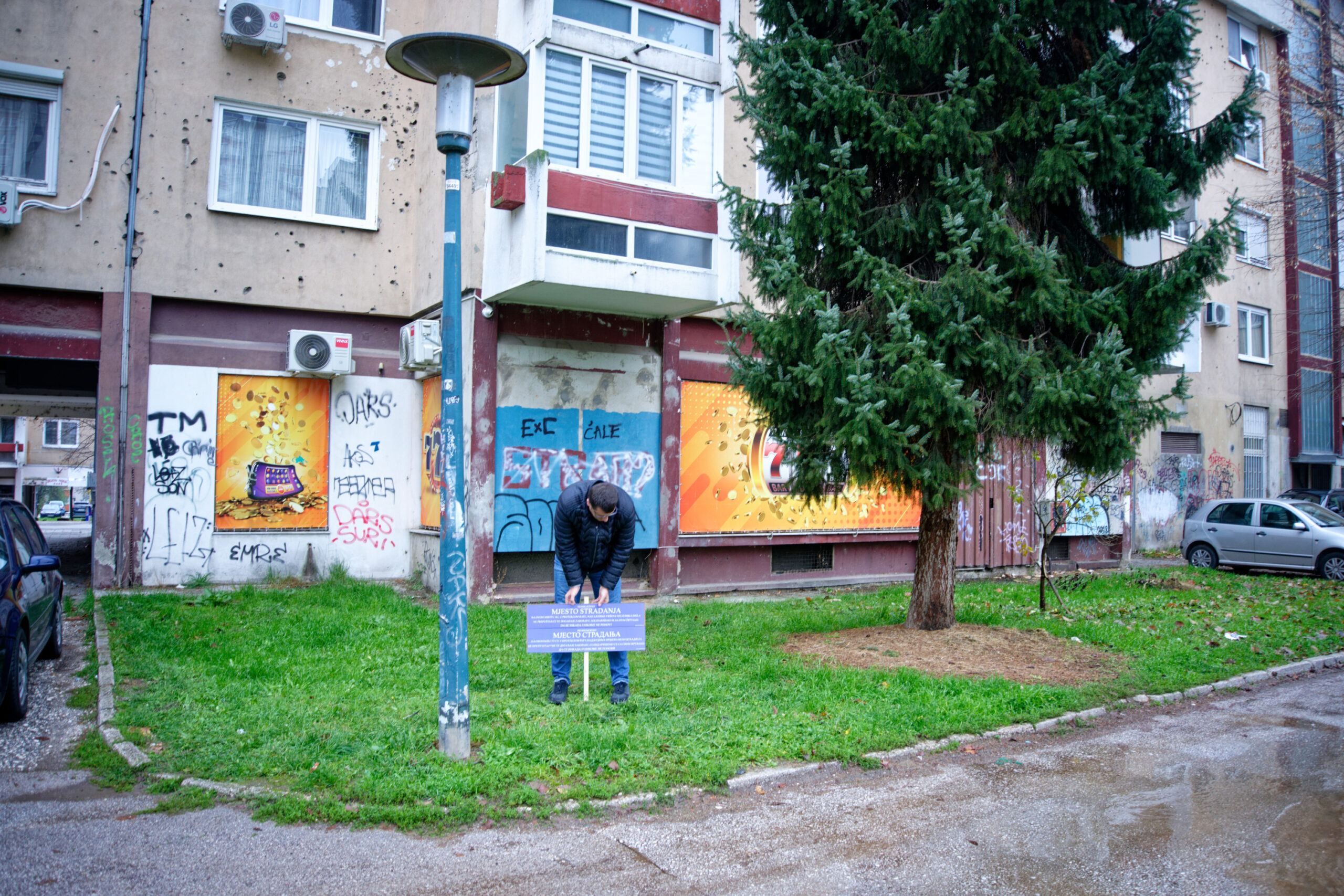
Bosnia and Herzegovina: Alipašino polje, Sarajevo
At ZAVNOBiH Square in the Sarajevo neighbourhood of Alipašino Polje, several detention sites were set up from mid-April 1992 for Serb civilians. The former Borsalino Café, the local community offices, the butcher’s shop and other commercial and residential buildings were used to unlawfully detain civilians. The prisoners were beaten and abused, the women were raped. Several people were killed, the remains of some have still not been found.
“With this 21st action of marking unmarked sties of suffering, we recall that unmarked sites of suffering exist not just in BiH, but also in Croatia and Serbia. What is common to all these places and countries is that the locations where the others suffered are being denied and ignored, and in the vast majority of cases, they don’t have a dignified memorial to remind us and warn us about the evil that took place there.With this action, we draw attention to the fact that Croatia, Serbia and BiH still have room for a just relationship towards the past and that they can take steps together, each in their area, that would amount to a step towards peace and reconciliation,” said Tamara Zrnović from the Centre for Nonviolent Action Sarajevo/Belgrade.
With this 21st action, we have brought the total number of marked sites of suffering to over 150. A list of marked sites with information about crimes and prosecutions, as well as a map of the sites of suffering are available on our website onms.nenasilje.org.
A video about the action to mark unmarked sites of suffering can be viewed here: